
AI ate the RAM, and Intel's PC business is paying for it
Intel shares fell about 28% after a weak fourth-quarter forecast blamed on memory prices driven by AI demand, wiping $12 billion off the US government's stake.
 DevIsDead Newsroom
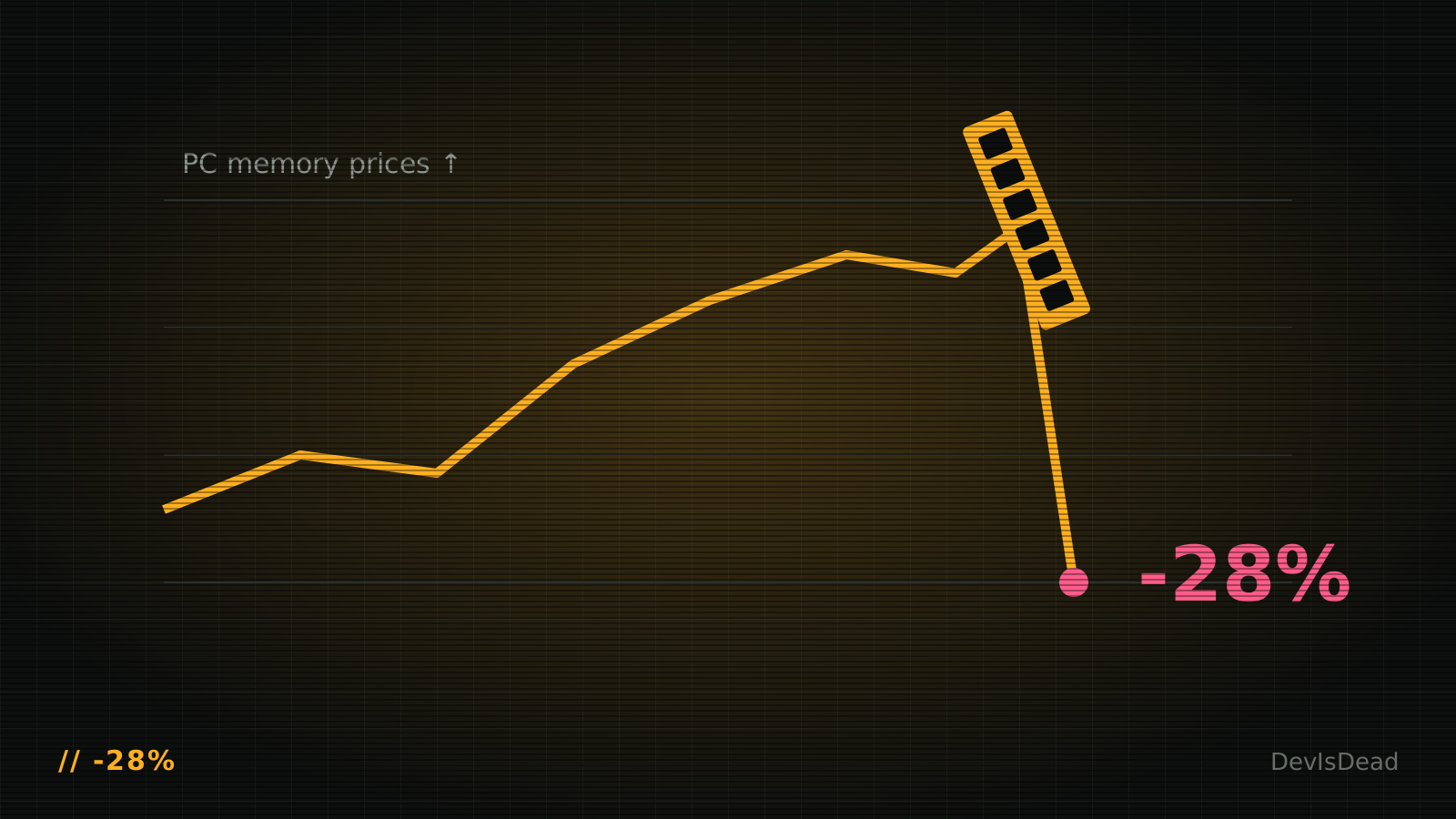
The AI boom has a bill, and this week Intel's shareholders paid it.
Intel stock dropped roughly 28% on Friday, one of its worst days ever, after the company forecast a weaker fourth quarter than analysts expected, TechCrunch reported. Julie Bort notes that the slide cut about $12 billion from the value of the US government's stake, citing CNBC. The government bought 10% of Intel more than a year ago, and Nvidia, which took its own large stake in 2025, slipped too.
The numbers
Intel guided to $15 billion to $16 billion in fourth-quarter revenue, against roughly $17 billion expected. It expects gross margin to fall to 37% from 43%, and said heavy investment means no positive cash flow. Even after Friday, the stock is still up more than 70% this year.
The AI connection
The reason is the same memory crunch hitting everyone. AI data centers are absorbing memory and other components, prices are rising, and PC buyers are holding off. CEO Lip-Bu Tan said customers had started signaling a PC slowdown because of memory prices and availability, at a time when IT budgets are already tight.
The twist is that Intel's data center business is growing fast, up 78% from a year ago. But it is limited by factory capacity. Its new Arizona fab is running, the next one isn't expected until 2028, and it is still trying to win outside customers away from TSMC.
Why it matters
This is the AI buildout's side effect in one earnings call: the same memory that makes GPUs useful is making laptops expensive. If your team's hardware refresh looks pricier than last year, now you know where the RAM went.
Scoreboard update: AI +1. AI's appetite for memory sinks Intel's PC outlook.
Stay undead.
Comments 0