
AI slop is knocking on science's door, and human gatekeepers are holding, for now
IEEE Spectrum's editor describes a writer who used AI to fake a paper, publishers' review defenses, and Wikipedia volunteers deleting AI text by hand.
 DevIsDead Newsroom
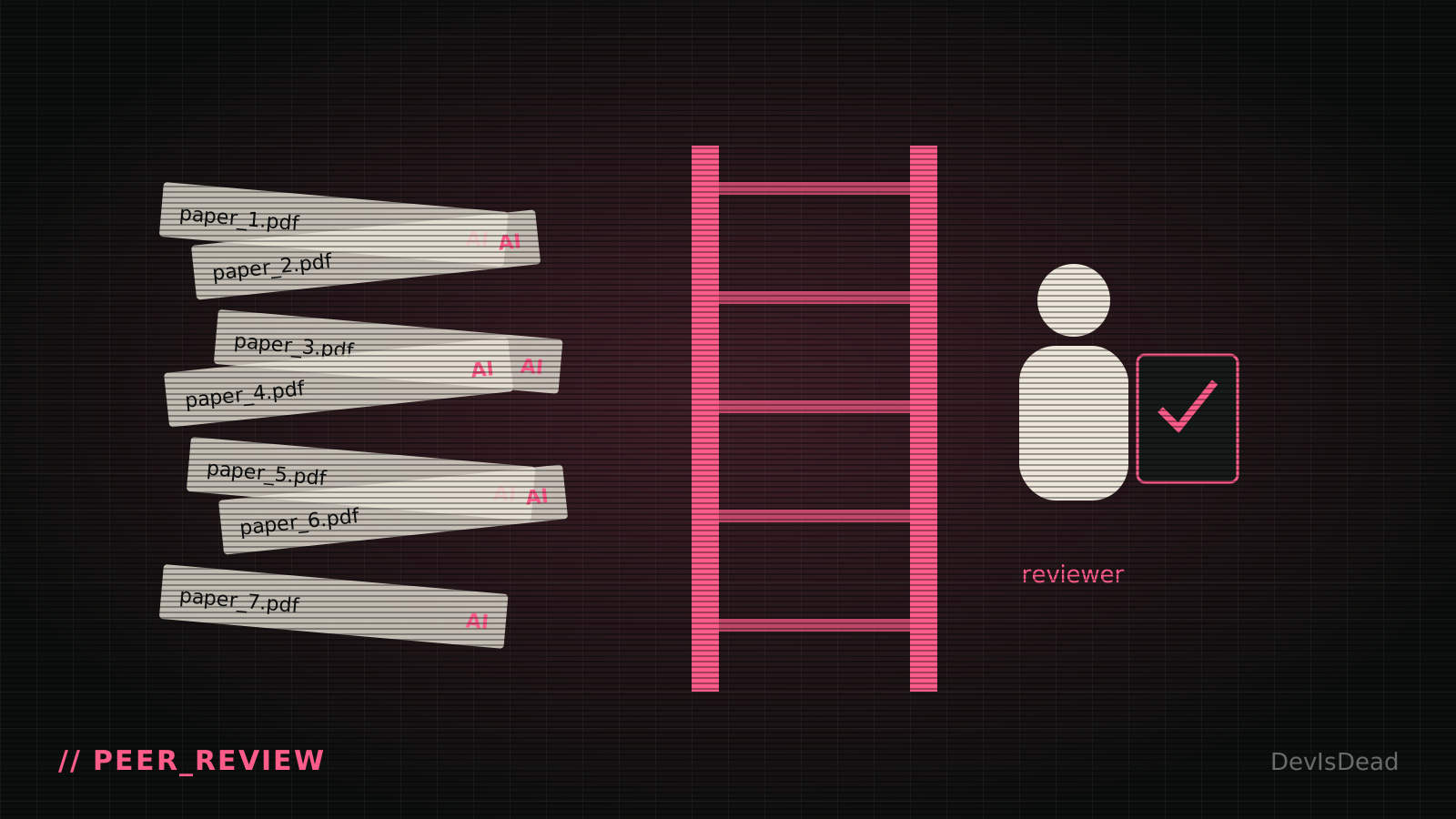
The scientific record runs on trust, and AI makes faking plausible science nearly free.
In a column for IEEE Spectrum, editor Harry Goldstein previews two pieces in the magazine about defending human knowledge from AI-generated slop.
In the first, freelance writer and applied mathematician Benjamin Skuse used AI to generate papers and tried to get them past IEEE's defenses. According to features and AI editor Eliza Strickland, he was struck by how little effort it took to produce something more or less plausible. The finding: IEEE's mix of human reviewers and research-integrity software is keeping up with papers made using free tools. But stronger models don't make the same obvious mistakes, which leaves publishers in an arms race.
The second is an interview with Ellia Lebleu, who helped start WikiProject AI Cleanup, the volunteer group finding and removing AI-generated text from Wikipedia with fewer people and tools than commercial publishers have.
Goldstein's worry is bigger than any one journal. If people can't assume the scientific record and basic facts are reliable, trust in the institutions that maintain them erodes too.
The takeaway
Right now the gatekeepers are winning against lazy slop. The open question is what happens when the slop stops being lazy. Detection alone won't scale; provenance, accountable authorship and reviewers with time to actually read will matter more.
Scoreboard update: Humans +1. Science's human gatekeepers are keeping AI slop out, for now.
Stay undead.

Comments 0