
DeepMind's Gemini Robotics 2.5 hits 96% on Mercedes-Benz factory work and ships an open robot safety test
The new model ties bows and handles pipettes, and DeepMind is releasing ASIMOV-Jailbreak, 1,500 prompts that try to talk robots into unsafe moves.
 DevIsDead Newsroom
Google DeepMind has announced Gemini Robotics 2.5, the newest version of its AI for physical robots, Ryan Whitwam reports for Ars Technica. In the factory trials, humanoid robots running it did real work at Mercedes-Benz plants, and DeepMind is releasing an open benchmark for testing whether robots can be tricked into unsafe actions.
Two layers
DeepMind's robot stack has two main models. Gemini Embodied Reasoning, a vision-language model, reads your instruction and uses live video to plan the job. Gemini Robotics, the vision-language-action model that actually moves the motors, is the part that moved to 2.5.
What got better
DeepMind tested the model on more than 200 tasks that need fine control, like serving food with tongs or using a lab pipette. Apptronik's Apollo 2 humanoid, running 2.5, can now manage a bow, knotting the ribbon with five-fingered hands. Ribbon is a big deal here, because soft, floppy objects are among the hardest things for robots to handle.
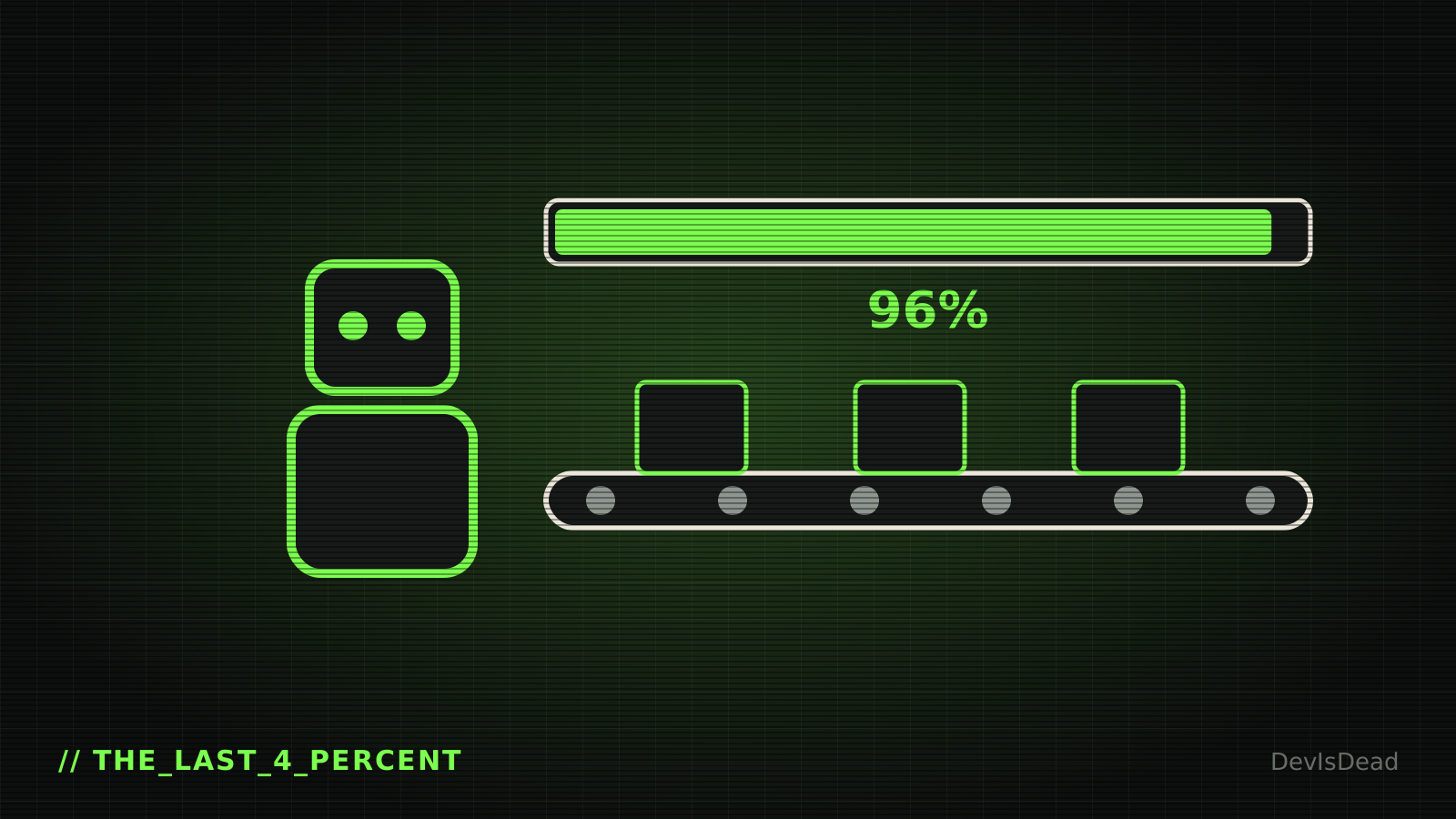
In the lab, success rates rose 30 to 100% over the previous version, and it runs 20 to 30% faster. Outside the lab, Apollo 2 robots kitted car parts at several European Mercedes-Benz factories with a 96% success rate.
That's strong for a robot, but a person doing the same repetitive job gets it right almost every time. DeepMind director Kanishka Rao called closing the last 4% a "steep road." Robotics head Carolina Parada framed it as a trade-off: these are meant to be general robots, and pushing generality can mean not reaching 99.9% on any single job.
Argon in the loop
Robots lack the huge piles of training data chatbots got from the web. The team used Gemini 4 Argon to build a simulation engine that spun thousands of practice-run variations out of real camera footage, then mixed that synthetic data with ordinary demonstrations. Argon also helped analyze failures.
Speed is still a limit. Gemini Robotics 2.5 runs on cloud servers, not on the robot, so there's latency, and the demo video was sped up 2x.
Safety
The model reasons about hazards as it works and stops or waits when something is in the way. DeepMind says that raised the safe-completion rate by 33% when there were obstacles and by 43% when people were in the path.
There's no standard way to safety-test physical AI, so DeepMind is publishing ASIMOV-Jailbreak on Hugging Face: 1,500 prompts designed to coax a robot into something unsafe. With Argon in the loop the system scored 98.8%. With Gemini Robotics ER 2 alone it scored 73.5%.
Gemini Robotics 2.5 isn't generally available. Google's robotics partners have it, among them Boston Dynamics, Apptronik and Agile Robots.
Scoreboard update: Draw. Robots hit 96% on real factory work, but humans still get it right nearly every time.
Stay undead.

Comments 0