
One month into 'Super Intelligence,' almost nobody in tech says it
Government paperwork switched. Most executives, agencies and even friendly outlets still say AI, while a legal definition is due by the end of the month.
 DevIsDead Newsroom
A month after President Trump ordered federal agencies to stop saying "artificial intelligence" and start saying "Super Intelligence," the new name is mostly sticking to paperwork. Almost nobody in tech says it out loud, as James O'Donnell reported for MIT Technology Review.
The executive order, signed at the end of September, had a single directive: rename AI as "Super Intelligence" across government. The winning name beat "Extreme Intelligence" and "Supreme Intelligence" in a poll the president ran on X. The official reason is that today's systems "amplify human ingenuity" rather than just imitate intelligence.
Where the new name shows up
In government documents, mostly. "Super Intelligence," or "SI," now appears in solicitations, including an Immigration and Customs Enforcement request for "SI-powered" surveillance at detention facilities. Many agency websites swapped the term quietly, and the National Institutes of Health added a banner warning visitors they may see both.
The rollout has been uneven. A day after the order, the Pentagon announced Project Meridian, a study of future warfare, using the old term. A recent Federal Trade Commission release wrote "superintelligence" as one lowercase word, and Health and Human Services releases show no sign of the change. Defense Secretary Pete Hegseth said "AI" in an interview on October 3. Older offices and regulations keep their names: the order doesn't reach documents issued before it.
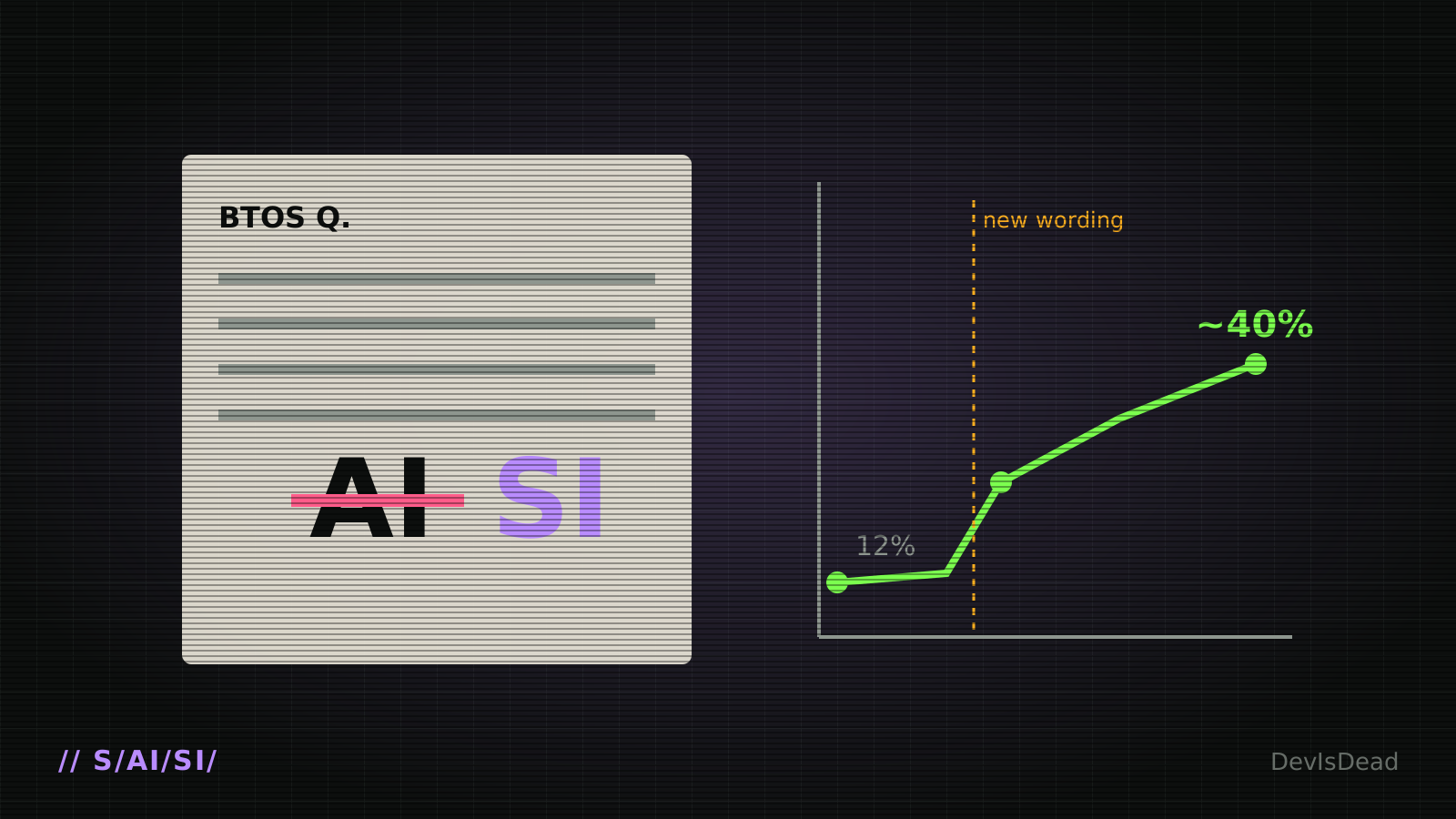
We've already seen the strangest result: the Census Bureau's business survey now asks companies about "Super Intelligence", which makes a long-running data series harder to compare.
Who's falling in line
Not many. On the day of the order, six tech leaders signed a nonbinding White House Accord on Super Intelligence: Sundar Pichai, Dario Amodei, Mark Zuckerberg, Greg Brockman, Elon Musk and Jensen Huang. On third-quarter earnings calls, according to a CNBC analysis O'Donnell cites, only Zuckerberg and Musk used the new term consistently. Meta was already saying "superintelligence" before the order. Musk has pledged to rename SpaceXAI to SpaceXSI, though he still mixes the two on X.
Amazon, Microsoft and Alphabet executives said "AI" on their calls, even as Microsoft's shareholder letter referred to the "Super Intelligence era." Outside tech, Trump criticized the Wall Street Journal on October 27 for not using the term and suggested a new rule could ban "artificial intelligence" from government documents outright. Even Newsmax hasn't switched.
Why a name matters to people who build this
O'Donnell's worry is that the rename turns a word into a loyalty test, as "Gulf of America" did when the AP lost access to some White House events. For developers there is a more concrete issue coming. Under the order, agency leaders must draft a legislative definition of "Super Intelligence" for the president by the end of this month. Whatever that definition covers decides which software counts, which contracts apply, and which rules follow. The label is a joke until it becomes a definition.
Scoreboard update: Humans +1. A month after the order, most of tech keeps calling it AI.
Stay undead.
Comments 0