
OnlyFake's creator explains how his AI fake ID site sold forgeries for $15 each
Yuriy Nazarenko spent days forging a single passport by hand, then automated it and added generative AI. The DOJ says the site made over $1M before his arrest.
 DevIsDead Newsroom
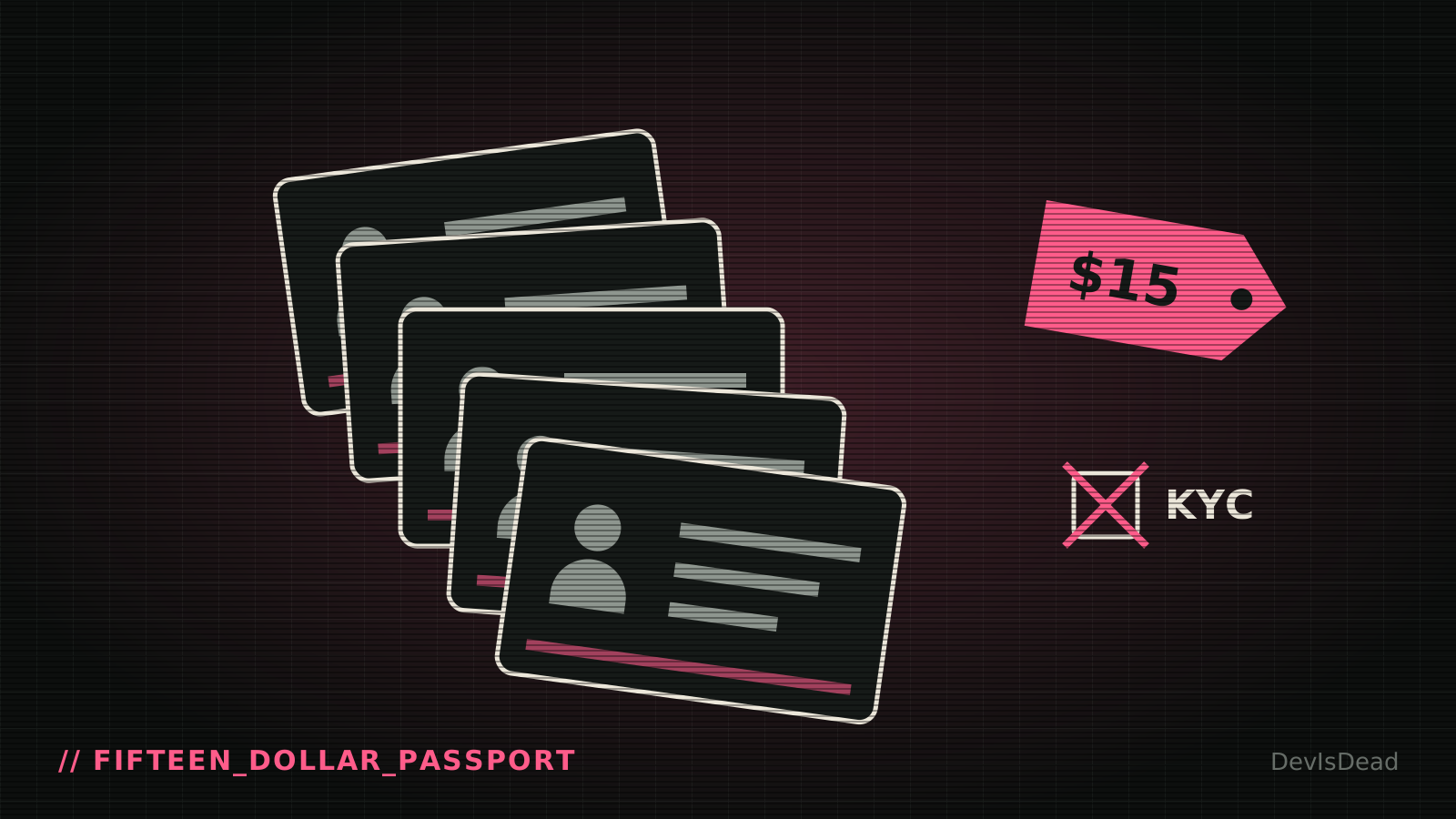
In 2024, 404 Media exposed OnlyFake, an underground site that made realistic photos of fake IDs with neural networks. Now its creator is talking. Joseph Cox spent months interviewing Yuriy Nazarenko for 404 Media, and the full story is behind its paywall; here's what the free excerpt covers.
From one passport a week to thousands
Nazarenko started out forging IDs by hand in his grandfather's Ukrainian apartment. Editing a scanned passport pixel by pixel, from the machine-readable code at the bottom to the photo and each document's quirks, could take him up to a week for one high-quality fake.
That didn't scale. He built templates, then a website that filled in a customer's chosen details automatically, and once generative AI went mainstream, he added that too. The result could produce not just scans of driver's licenses and passports but photos of them lying on a sofa or desk, as if just pulled out of a wallet. Customers could make hundreds or thousands at once.
Why that matters
Scanned IDs are a skeleton key for financial crime: opening bank accounts, getting past crypto exchange checks, renting property under a false name. A good fake has to get past people and software alike. OnlyFake made that available to anyone with a few dollars in Bitcoin, which undercut the whole premise of know-your-customer checks. According to the Justice Department, which announced his guilty plea, the site made more than $1 million selling fake IDs at $15 each.
Nazarenko, now 28 and out after a year in prison, says North Korean fake IT workers used the site. After finishing his US sentence, he spent months in ICE detention, and now lives in Asia. The FBI also shut down some of OnlyFake's copycats.
He told 404 Media the project taught him what happens "when the scale of something grows faster than your understanding of its consequences."
For anyone building identity checks
A photo of an ID is no longer evidence that the ID exists. If your onboarding flow still trusts an uploaded picture plus a selfie, assume generated documents have already been through it. The fix is verification against something a generator can't fake: the issuing database, a chip read or a trusted third party.
Scoreboard update: Draw. AI turned forgery into a $15 product, and old-fashioned investigation still caught the forger.
Stay undead.


Comments 0