
OpenAI says GPT-6 Astra designed a gadget, board to firmware, in under a week
The device lets you talk to Codex. Astra did the enclosure, PCB, firmware and UI, OpenAI says, though the factory needed several rounds to fix what it missed.
 DevIsDead Newsroom
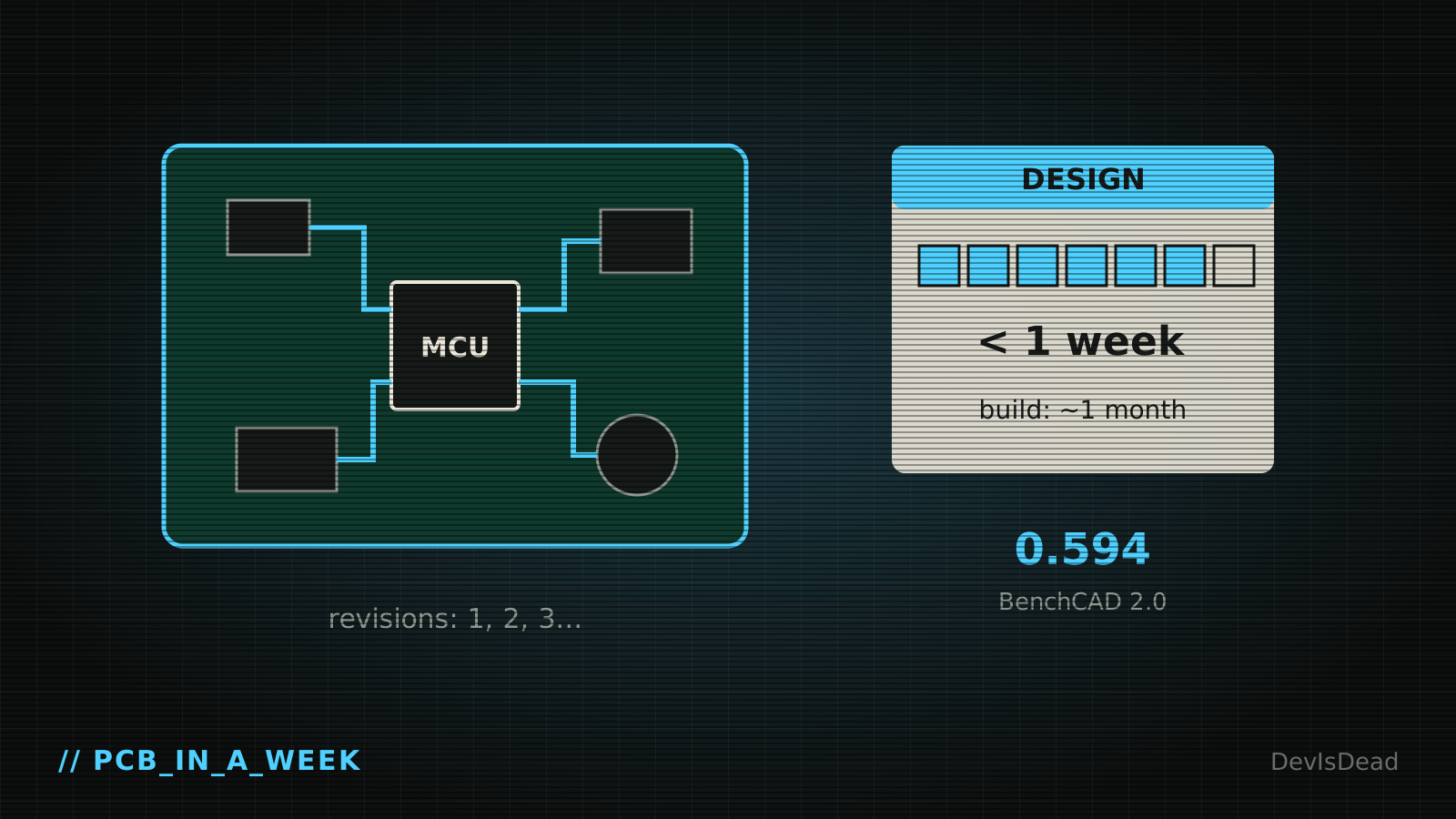
Software engineers are getting used to models writing their code. Hardware engineers, here's your turn.
OpenAI says its hardware team had GPT-6 Astra design a device for talking to the Codex coding agent, as a side project, in less than a week, The Decoder reports. By OpenAI's account, the model handled all of it: the enclosure, the PCB layout including component choice and trace routing, the firmware and the user interface.
What actually shipped
A small batch of prototypes, built by a contract manufacturer in under a month. That's the part to read twice, because it needed several revision rounds. The model sometimes ignored what a factory needs: tolerances, assembly steps and other production limits. In other words, it got the design done fast and left the factory to find the problems.
That's not a knock. Any first-time hardware designer misses the same things, and DFM (design for manufacturing) knowledge lives mostly in the heads of people who've been burned by it. But it means the "under a week" figure covers the design, not a finished product. The month of manufacturing and the fixes after it are where the experienced engineers still earned their pay.
Benchmarks vs. vibes
OpenAI also points to BenchCAD 2.0, a benchmark that checks if a model can rebuild 3D parts and full assemblies, and spot how a circuit board is wired. Astra at its highest reasoning setting scores 0.594. An unnamed internal model scores 0.875, and OpenAI has said nothing about what that model is. So the headline jump is a number for something nobody outside can use or test.
The usage figure is more concrete. Inside OpenAI, hardware teams lean on Codex and ChatGPT for CAD work, production drawings and simulation, in fields such as robotics and compute infrastructure, and that their token use is up 23x since February. OpenAI is also reportedly building its own device, somewhere between an AI speaker and a phone, which makes all this a demo of its own pipeline as much as of the model.
What to watch
Whether outside teams get the same results. A lab's own engineers using its own model on a side project is a best case: friendly reviewers, easy access, no customer. The real test is a small hardware shop shipping a board Astra laid out, with no OpenAI engineers in the room when the tolerances don't line up.
Scoreboard update: AI +1. An OpenAI model takes a gadget from enclosure to firmware in a week, even if the factory had to clean up after it.
Stay undead.

Comments 0