
A humanoid robot cleaned a reporter's apartment, with a human steering it from across town
Tau Robotics charges $60 a week for two remote-piloted humanoids in San Francisco, and uses every cleaning to train robots that won't need the pilot. They can already vacuum and mop alone.
 DevIsDead Newsroom
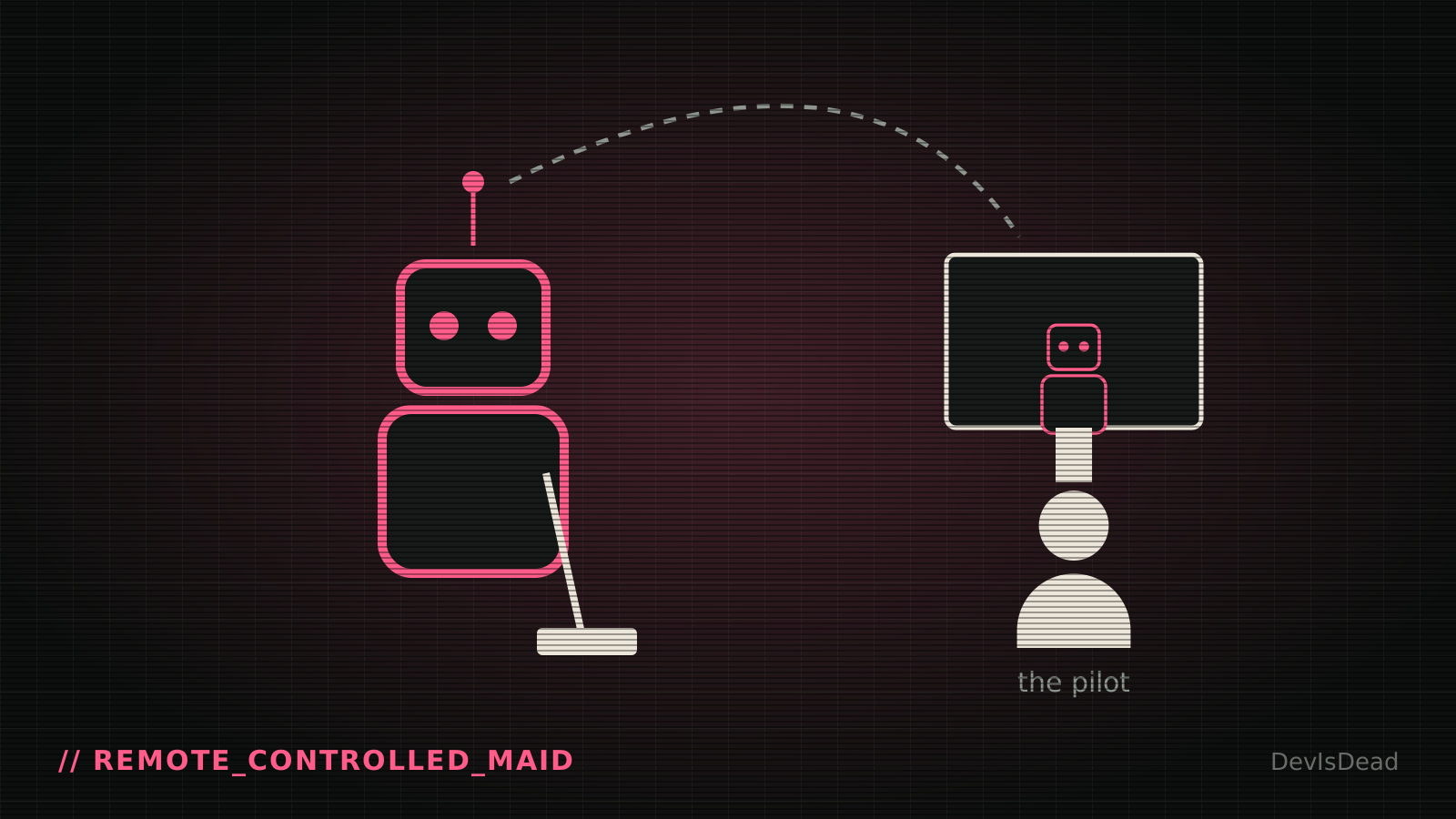
The robot maid is here, sort of. Grace Huckins booked a humanoid cleaning robot for her San Francisco apartment without telling the company she was a journalist, and wrote up the result for MIT Technology Review. The verdict: charming, slow, and still mostly a puppet.
A cleaning service that's really a data business
Startup Tau Robotics wants autonomous cleaning robots eventually. For now, a human pilot at headquarters drives each robot remotely, watching through cameras in its head and wrists. Harder jobs like making the bed and folding laundry use kinematic guidance: the pilot performs the motion and the robot mimics it.
Every wiped counter and folded shirt becomes training data for the next, more independent generation. That data is why the price is low for the technology. When Huckins booked, an hour with one robot cost $30. The current rate is $60 a week for two robots, and a one-off visit is $100. Co-founder Cornelia Weinzierl says some tasks, including vacuuming and mopping, already run with no human help.
How it went
Badly, then better. On the first visit, the four-and-a-half-foot robot climbed her front steps like it was drunk, which Weinzierl blamed partly on signal delay. A carpeted staircase beat it entirely, and Weinzierl carried it up. Then the heat knocked out the remote operator's equipment, the robot couldn't continue, and the visit ended early. Tau apologized and comped it.
The second visit went far more smoothly. The robot cleaned the kitchen, skipping the stove, and handled the toilet, reattaching a brush head that fell off three times. It also left taps dripping, knocked over a sealed olive oil bottle and couldn't right an air purifier it had tipped. Huckins found it charming anyway, but noted that watching it work took longer than doing the job herself.
The part that isn't cute
Tau has done only a couple hundred cleanings, and training robots for the endless variety of real homes will take enormous amounts of data. If it works, though, the reporter points out that people who clean for a living could lose their jobs, and the US has no plan for workers displaced by AI. Weinzierl argues cleaning has high turnover and injury risk and few people want it, and says Tau is also eyeing mold remediation and home health care.
For now it's closer to a remote-control car than a Waymo. That's the stage to watch: the human pilot is the product today, and the training set for tomorrow.
Scoreboard update: Draw. A humanoid robot cleans the toilet, but a human is still steering it from headquarters.
Stay undead.



Comments 0