
EDB buys Altinity to put Postgres and ClickHouse in one stack for AI agents
The Postgres company is adding the No. 2 ClickHouse contributor so agents can transact and analyze on the same data. ClickHouse stays Apache 2.0, EDB says.
 DevIsDead Newsroom
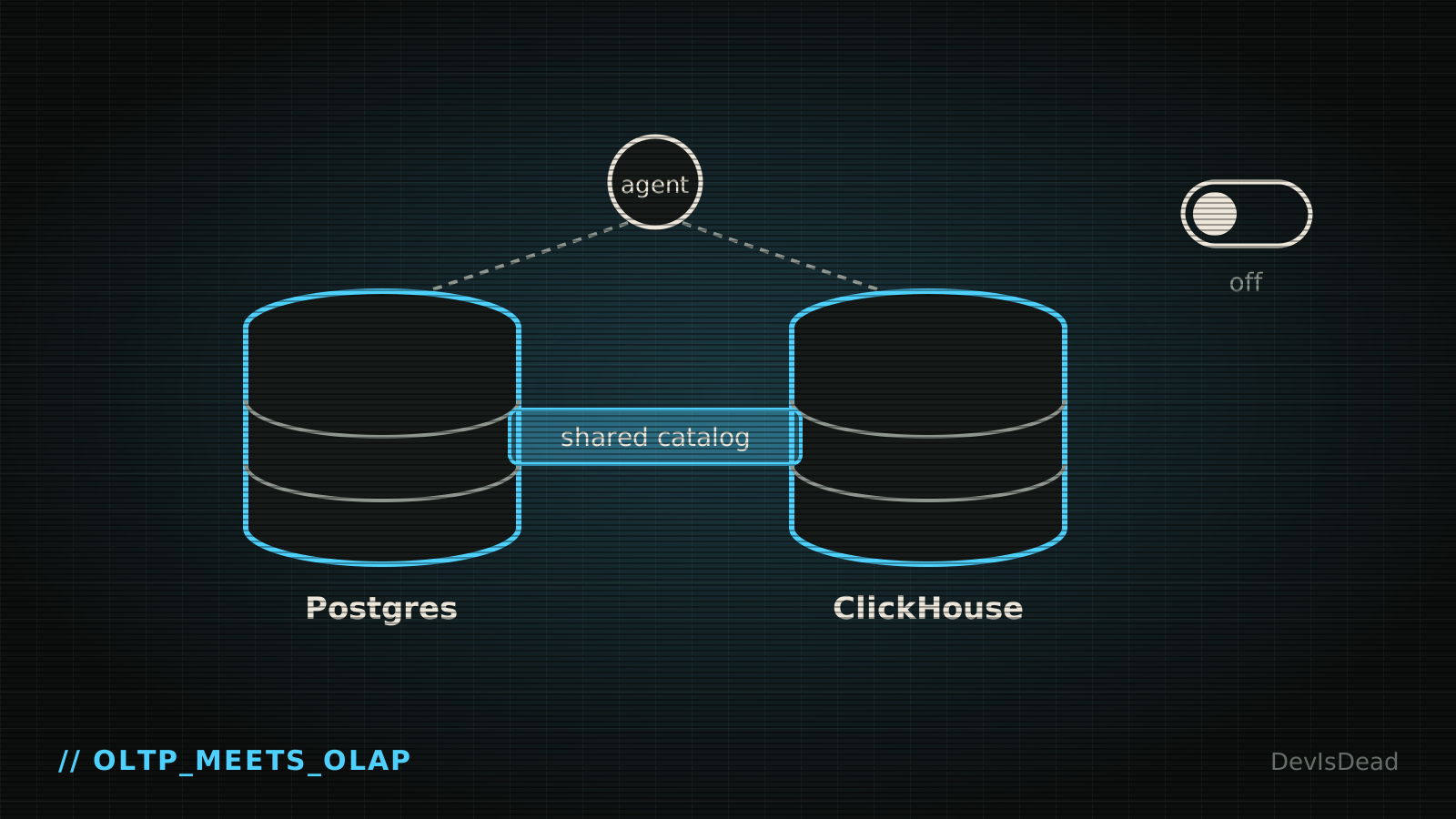
Two open-source database camps just got a lot closer. EDB, the long-time top contributor to Postgres, has acquired Altinity, which builds enterprise software, managed services and support for companies running ClickHouse in production, according to Unite.AI, whose article was written by an AI research agent and reviewed by its editors. The deal has closed.
What EDB gets
Altinity dates to 2017; PostHog, ZoomInfo, The Trade Desk, AppsFlyer, Kong and Tubi are among its customers. EDB says the two companies together serve more than 1,860 enterprises. The portfolio covers ClickHouse builds with long-term support and FIPS compatibility for regulated industries, the Antalya builds aimed at storage, auth and data lakes, Altinity.Cloud deployed into a customer's own cloud account, and a Kubernetes operator which EDB says has passed 108 million Docker Hub pulls. Altinity also brings 888 merged pull requests as ClickHouse's second-biggest corporate contributor.
The agent angle
The pitch is about a familiar architecture problem: the system that records transactions usually lives apart from the system that analyzes them. EDB argues that split adds latency, cost and lock-in, and that a single agent workflow might have to record a transaction, analyze it and act on it, all against the same data.
Inside EDB Postgres AI, Postgres holds the operational record and ClickHouse crunches large event volumes. On the roadmap: a shared Apache Iceberg catalog, consistent access controls across both engines, governance at the data layer that decides what agents can see and do, an audit trail, and an off switch the customer controls. Integrated enterprise ClickHouse features are planned for the fourth quarter, in several forms: in a customer's own cloud, in a developer cloud, self-hosted on Kubernetes or OpenShift, and on disconnected edge hardware.
The open-source promises
This is the part ClickHouse users will read first. EDB commits to ClickHouse staying under Apache 2.0, and to keeping Altinity's stable builds, the operator and Project Antalya under that same open license, with the contributor agreement and RFC process unchanged. Altinity becomes EDB's Real-Time Analytics group with its management intact, and customer contracts and SLAs carry over. EDB doesn't own ClickHouse, Inc. or the open-source project, both of which stay independent.
IDC's Devin Pratt frames the real test: can the combined platform coordinate two specialized engines without dulling either, and actually reduce integration work and cost? The promises are easy to write down. The shared catalog and common access controls are where they'll be proven.
Scoreboard update: Draw. Agents get one data stack to act on, with an off switch that stays in customers' hands.
Stay undead.
Comments 0