
Physicl raises $10M to build realistic 3D worlds where robots can practice the hard cases
Its founder's last company made 3D product renders until generative AI swamped it. Now the same pipeline generates synthetic training scenes for robots and world models.
 DevIsDead Newsroom
Alex de Vigan's last business was overrun by generative AI. His new one repurposes what it built to train robots. Inovia Capital led a $10 million seed round for Physicl, Tim Fernholz reports for TechCrunch.
From product renders to robot training
De Vigan spent a decade building nfinite, which helped brands and retailers create 3D models of their products for online stores. When transformer-based AI arrived, the company shifted to generative imagery, and de Vigan saw that AI still lacked an understanding of space and physical objects. His team's pipeline, which turns messy real-world information into 3D scenes with correct geometry, materials and physics, could fill that gap.
Robot builders want better training data. Training on video has disappointed, and collecting data by remotely piloting robots is expensive. Simulation is promising, but only if the simulated world behaves like the real one.
What it sells
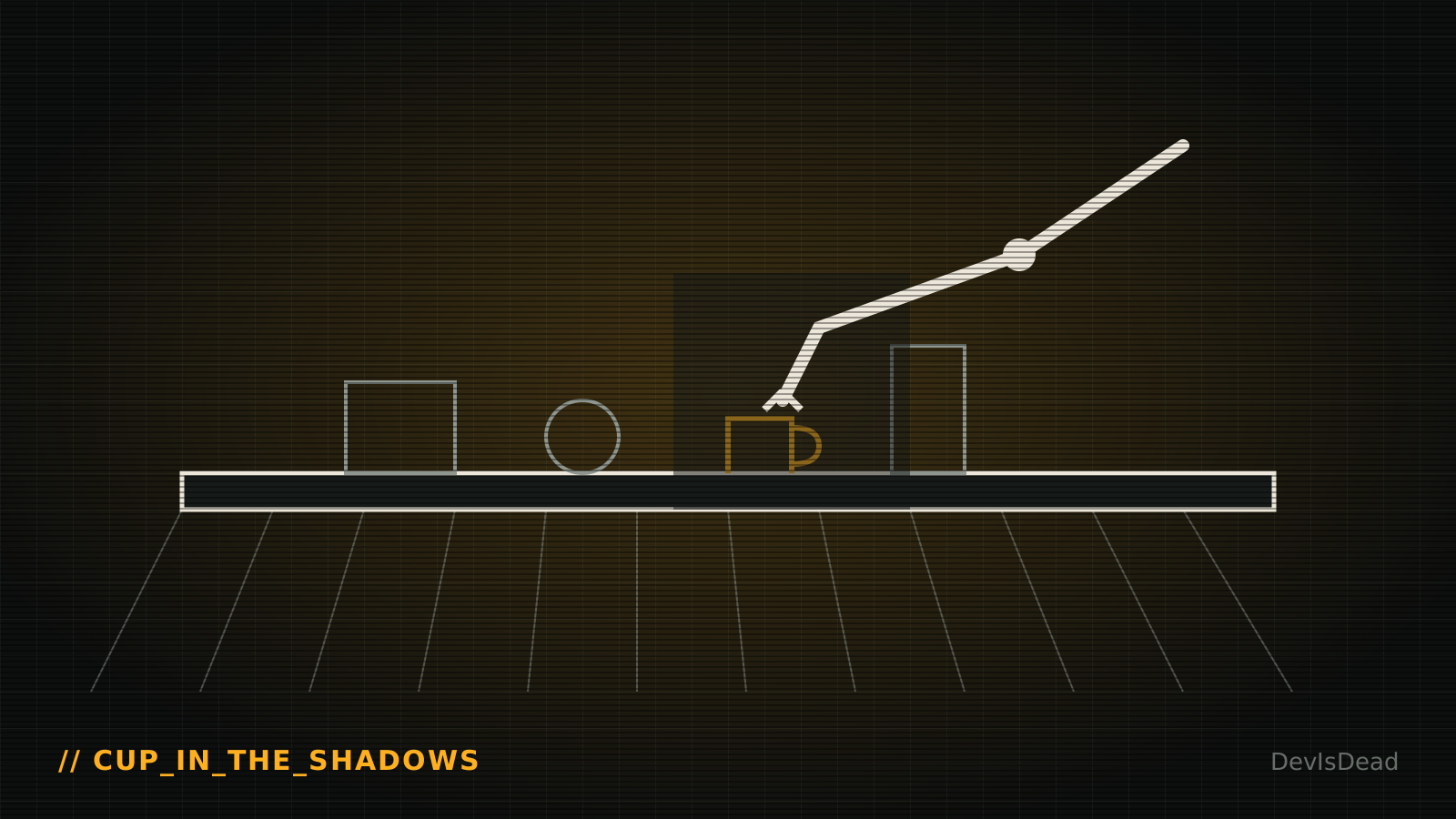
Physicl's first product, Studio, ships with a library of 10,000 3D environments and 100,000 objects. Users build scenes to generate synthetic data for specific problems, for example a robot that can't pick out a cup on a cluttered counter, or a cup sitting in shadow. The focus is post-training on difficult edge cases.
World model builder SpAItial, an early customer, used Physicl's data to improve its Echo-3 release. Its CEO, Technical University of Munich professor Matthias Niessner, says hand-curating training data is slow, and generating it on the fly is the attraction. De Vigan wants Physicl to be ongoing tooling, not a one-off data vendor, turning customers' images and lidar captures into 3D scenes and billions of variations.
The context
It's a crowded, fuzzy market, as de Vigan admits, full of companies collecting, labeling or generating robot data. But the bottleneck is real: as the remote-piloted cleaning robot showed, today's robots still learn mostly from humans doing the task. Good simulation is the cheaper path, if it's faithful.
Scoreboard update: AI +1. A startup builds realistic practice worlds so robots can learn without a human holding the controller.
Stay undead.

Comments 0