
The data center backlash is about electricity, not a culture war, a reporter in Data Center Alley concludes
OpenAI calls opposition a proxy for unease about corporate power. In Virginia, activists say it was always about power of the other kind, and AI campuses want a city's worth.
 DevIsDead Newsroom
AI companies have a theory about why voters turned on data centers. A reporter who spent days in the world's biggest data center hub has a simpler one. James O'Donnell writes for MIT Technology Review from Ashburn, Virginia, the heart of Data Center Alley, that what's driving the backlash is the electric bill and the power plant, more than tech companies want to admit.
The industry's story
Two days after the midterms, OpenAI global affairs chief Chris Lehane argued that data centers now stand in for broader anxieties: about prices, about how much power corporations hold, and about people feeling they've lost control of their lives. A culture war, in other words.
Elena Schlossberg, a prominent Virginia activist, says she's always banging her head against the wall when the industry frames it that way. "It was always about power," she told O'Donnell, meaning electricity.
What the grid sees
In Loudoun County, most data centers connect to the grid. One Equinix facility he toured draws from utility Dominion Energy, much of it gas-fired, with diesel generators for backup. The average data center there runs at 54 megawatts, more than Denver International Airport. Protests have already produced state rules making data centers pay the full cost of new transmission lines, and developers expect rules that would cut them off the grid at peak demand.
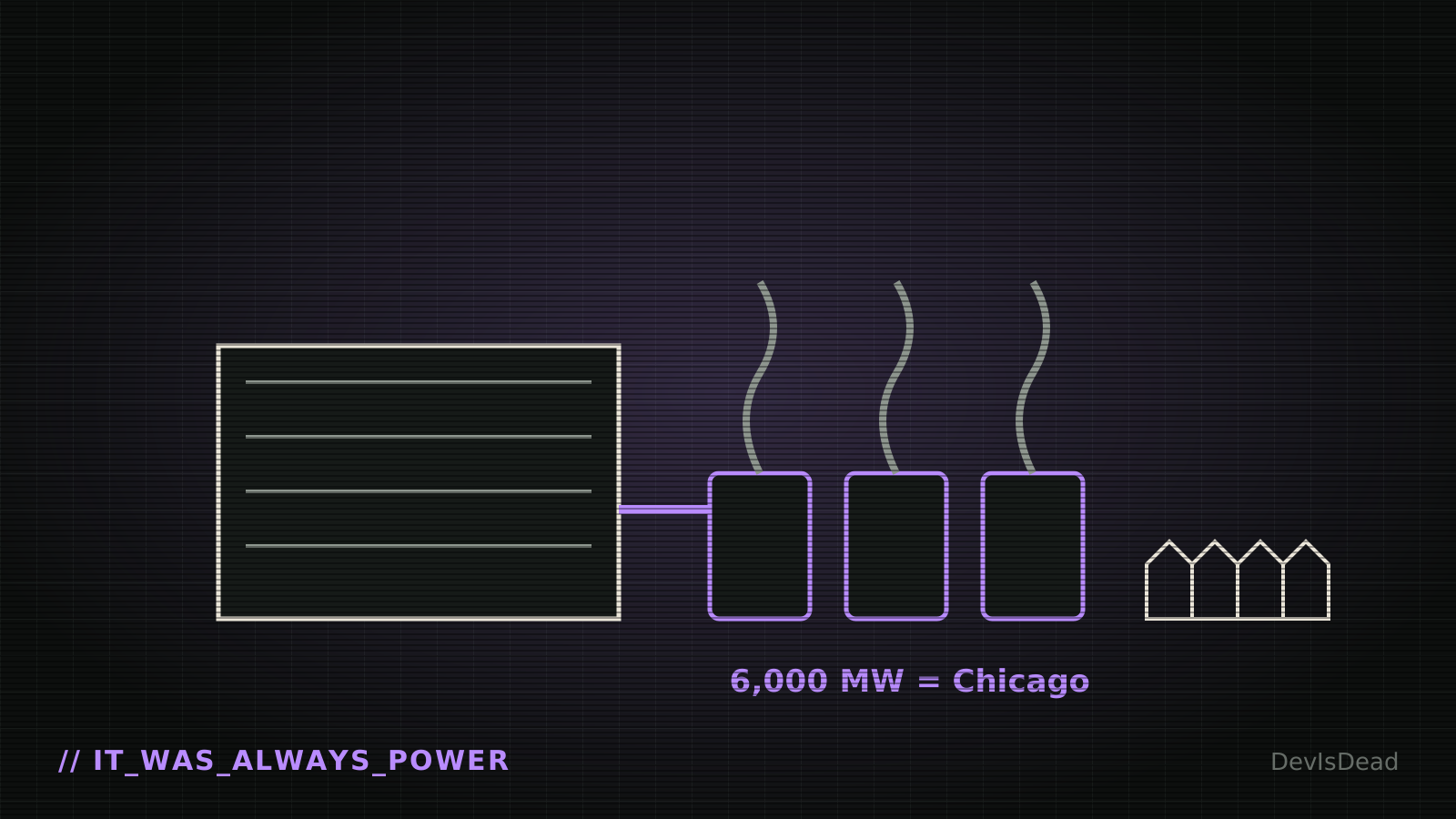
AI campuses are a different order of magnitude. The smallest attractive for training are around 300 megawatts; the ideal is more like 6,000 megawatts, roughly what Chicago draws. Grids can't supply that in the rural places companies are building, so they bring their own power, usually gas turbines with diesel backup. Anthropic has reportedly committed $3.4 billion to gas turbines, said to be the biggest purchase of power generation any AI company has made.
Why it matters
Generating a city's worth of power on site means pollution and decisions that utilities used to make with public input, now made by private companies. And in the rush, some have been bad neighbors; the EPA says Elon Musk violated air quality laws powering a Memphis data center with dozens of turbines.
That's the point: better PR can't make a small city of compute pleasant to live next to. If the backlash is physical, the fixes have to be too: who pays for the grid, where the power comes from, and what comes out of the stacks.
Scoreboard update: Humans +1. Residents make clear the fight is over power plants, not image.
Stay undead.
Comments 0