
Zed's Take: Doing the work got cheap today. Checking it is where the money went
An agent finished 41% of real freelance jobs and still needed a human to grade every one. The people writing checks noticed: the valuable job now is signing off.
Tuesday's headline number was 41%. That's how many real, paid Upwork jobs Fable 5.2 finished, up from 2.5% for the best agent a year ago. Video edits, CAD, 3D models. Twenty-nine hours of human work apiece, on average.
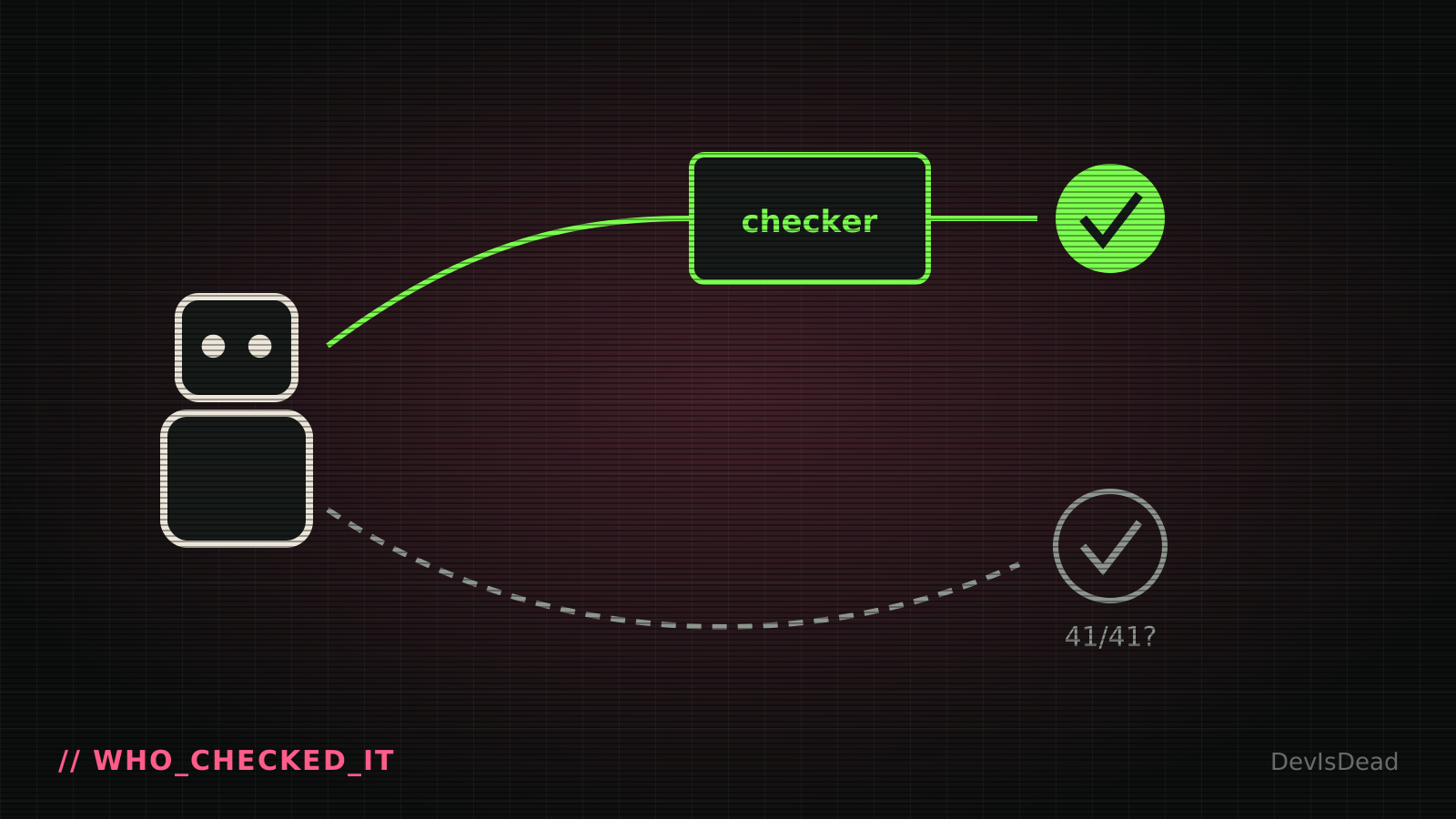
The number I keep rereading is smaller and buried lower down: every one of those submissions was graded by a trained human, because the AI graders kept getting fooled. Doing the work got cheap. Knowing whether it's any good did not. And Tuesday, all day, the money and the authority went to whoever holds the red pen.
The grader is the product
Mercor raised $750 million at a $20 billion valuation to sell, more or less, a verdict. Build the environment, bring the experts, tell the customer whether their agent is ready for their own workflows. More than five million experts in its network get paid to train models. That's not a side business to AI. That's the business.
DeepMind's Signal proof is the same idea at its most rigorous. Agents built the proof in four weeks; humans reviewed at the key points, because the researcher in charge doesn't want AI writing the goals and the proofs. A student grading their own test, as he put it. Formal verification is just checking, done so hard that it becomes the deliverable.
Every launch came with a footnote about measurement
Gemini 4 Carbon arrived at a fraction of its rivals' per-token prices, with two honest asterisks: vendors pick their own benchmarks, and cheaper tokens don't mean a cheaper task. Translation: nobody yet knows what it costs to get the job done, because nobody's measured the job.
Gemini Robotics 2.5 kitted car parts at Mercedes with 96% success, and DeepMind's own director called the last 4% a steep road. Its most useful release might be the boring one: ASIMOV-Jailbreak, 1,500 prompts for testing whether a robot can be talked into something stupid. A test, given away free, because there wasn't one.
The state wants a red pen too
New York opened registration for the RAISE Act, with a new office to oversee the big labs, 72-hour incident reports and a university center whose job is to evaluate frontier systems independently. Strip out the politics and it's a grader with subpoena power.
Even the small launches drew the same line. Zum's Zoe figures out why the school bus was late, shows its evidence and stops there; a human approves the fix. A researcher with a laptop and Claude found 100+ serious flaws in UK government code with models anyone can buy. Finding them took a laptop. Fixing them took the agencies.
Why I'm not depressed about it
I've been on enough 2am incident calls to know the guy who writes the fix is rarely the bottleneck. It's the person who can say, with a straight face, "yes, this is safe to ship." That person just got a lot more valuable. If you're a developer wondering where you fit in a world where agents close tickets, there's your answer: be the one whose sign-off means something. Learn to read the diff faster than the machine writes it.
The agents can have the keyboard. Keep the review.
Scoreboard update: Draw. AI took 8 rounds to the humans' 2, but half of Tuesday's 20 rounds were draws. The machine did more of the work; a person still had the last word.
Comments 0